By Alex Liu
ESG Manager, Americas Region
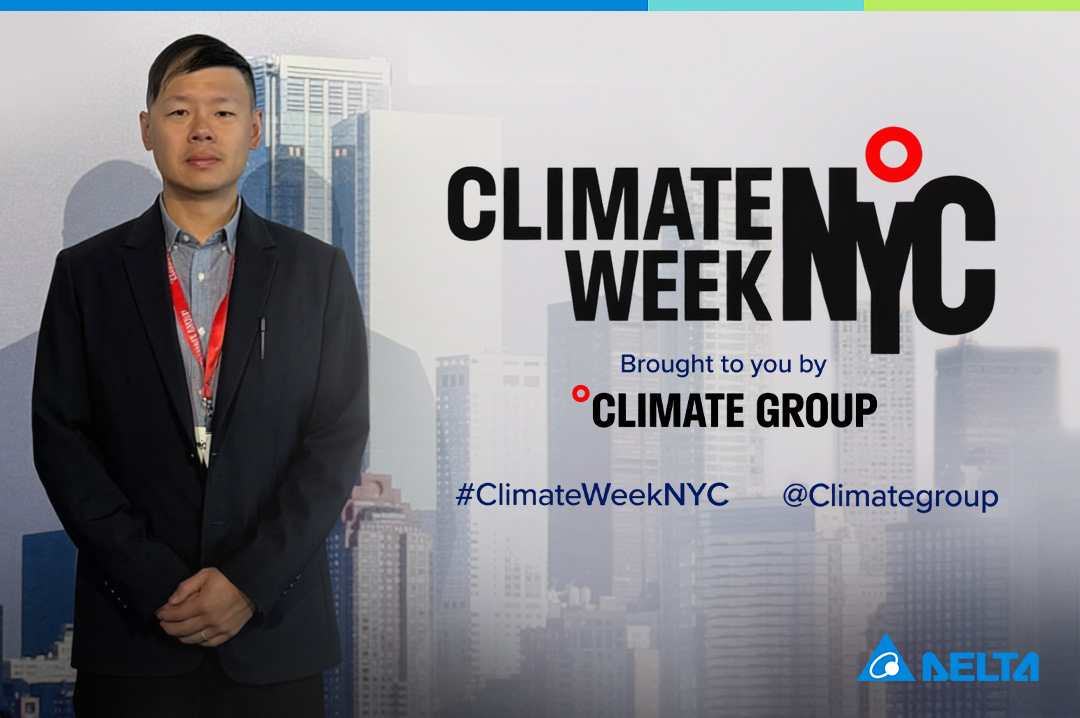
This year, the general mood has lifted quite a bit compared to last time. Climate change's lows and tragedies taught us invaluable lessons. We keep pushing with stronger wills, with messages grounded in science and connected to people’s lives. So what do we have to do from here?
Bear in Mind that Climate Security is National Security
Geopolitical conflicts greatly affect the stability of energy supply, resulting in unprecedented high prices and sharp changes to people’s lives. The drive to control resources beyond your borders seems to be behind most struggles.
What could break the cycle? The complete harnessing of renewable energy. We have the technology and capital to do it, and we can do it now. Delta Electronics invests heavily in renewable energy and believes it’s vital to unlock a secure and sustainable future. This is the key, clearer than ever, to get out from holding ourselves hostages to fossil fuel availability.
Decarbonize the Grid More Aggressively
The Greenhouse Gas Protocol (GHGP), the organization managing the global standard for emissions accounting (also the name of the standard itself), has proposed moving market-based Scope 2 accounting from annual to hourly matching. I think this is the right way to go as it will drive us to substantially increase renewable supply.
Today, the GHGP counts renewable energy purchases against Scope 2 (electricity) emissions as long as they fall in the same year as usage. The proposed update requires matching electricity use with renewable supply hour by hour, across all 8,760 hours of the year, significantly raising the bar organizations will need to clear for clean electricity claims.
Delta Electronics has been matching electricity use with renewable supply hour by hour for years, wherever it is possible, using our proprietary hardware and software capabilities centered on PV-enabled microgrid solutions and power purchase agreements (PPAs). We have proven it at Delta Electronics Americas and several global regions.
Nevertheless, we need regulatory support to make battery storage part of the game to close the gap between storage-enabled electricity generation and matching environmental attribute certificates (EAC). EACs, such as renewable energy certificates (RECs), are how users claim renewable energy use. But renewable power stored in batteries before it reaches the grid generates no RECs, so much of it goes unclaimed. Closing the EAC gap is essential to a 100% green grid.
Collaborate Better on Supply Chain Management—Especially Data Sharing
Through discussions with the World Business Council for Sustainable Development and Taiwan Climate Partnership, standards makers, and business partners, we know we all want an efficient and structured way to share data. The gap between suppliers and customers causes friction and sometimes distrust, and dampens supply chain sustainability.
We need a unified solution in a structured and trusted data format that goes all in on material significance, focusing on data that moves the needle. Just as auditors concentrate on the largest cash flows, sustainability reporting has to first zero in on the biggest emission sources instead of being slowed down by minor contributors.
In Sum
I am very hopeful.
It’s always a blast to engage with so many people striving for the same cause. Climate Week is hosted by Climate Group, the body that governs RE100, EV100, 24/7 CFE, and more; the week’s flagship event, The Hub Live, is held alongside the UN General Assembly, drawing heads of government, industry leaders, and policymakers for panels and closed-door sessions. (I attended two.)
I’ll close with the closing remarks by Dr. Kevin Rudd A.C. at The Hub Live: “Climate change is undeniable. Why? Because in the US the average home insurance premium rose a shocking 100% in the past 10 years, three times faster than inflation. Climate change IS the cause of increased natural disasters, and it has been externalized by polluters onto us through risk management. There is no denying that.”
Take the Next Step
I’m deeply grateful my company is fully committed to pumping the brakes on climate change and empowers people like me to work on making it happen. Together, we'll get this done.
To learn more about Delta’s ESG contributions, and how we're able to support your organization in this effort, visit our Sustainability ESG page.
Q&A
Q: What were the key takeaways from Climate Week NYC 2026?
A: Three priorities stood out: treat climate security as national security, decarbonize the grid more aggressively, and improve data sharing across supply chains. The overall mood was also more hopeful than in past years.
Q: What is hourly matching, and why does it matter?
A: Hourly matching is a proposed change to the Greenhouse Gas Protocol's market-based Scope 2 accounting. It requires companies to match their electricity use with renewable supply in every hour of the year, instead of on an annual basis. That raises the bar for clean electricity claims and will drive substantial growth in renewable supply.
Q: How is Delta Electronics approaching hourly matching?
A: Delta Electronics has matched renewable supply to demand for years wherever it is possible, using proprietary hardware and software centered on PV-enabled microgrid solutions and power purchase agreements (PPA). The company has proven this approach at Delta Electronics Americas and numerous global regions.
Q: Why does battery storage need regulatory support?
A: Battery storage is essential to round-the-clock renewable supply, but renewable power stored before it reaches the grid currently generates no renewable energy certificates (RECs). That leaves a gap between the renewable energy actually generated and what companies are able to claim, and closing it requires regulations that recognize storage.
Q: Why does supply chain sustainability need better data sharing?
A: Suppliers and customers report the same data in hundreds of different formats, which creates friction and distrust and slows sustainability progress. A unified reporting system focused on material significance, meaning the biggest emission sources, would streamline collaboration.